Induction Welding for TPO and PVC Roof Systems
Electromagnetic induction welding is a relatively new attachment method for TPO and PVC single-ply roof systems. This attachment method is commonly referred to as Rhinobond or InvisiWeld. The process relies on special TPO or PVC plates that are found directly beneath the roof insulation. The plates serve two purposes. First, they are used to attach the roof insulation or cover board to the structural roof deck. Secondly, since they are coated with the same material as the roof membrane, they are welded to secure the membrane. It is important to note that the plates are roof system-specific. For example, TPO plates can only be used with a TPO membrane and PVC plates can only be used on a PVC roof system.
How Does the Induction Welding Process Work?
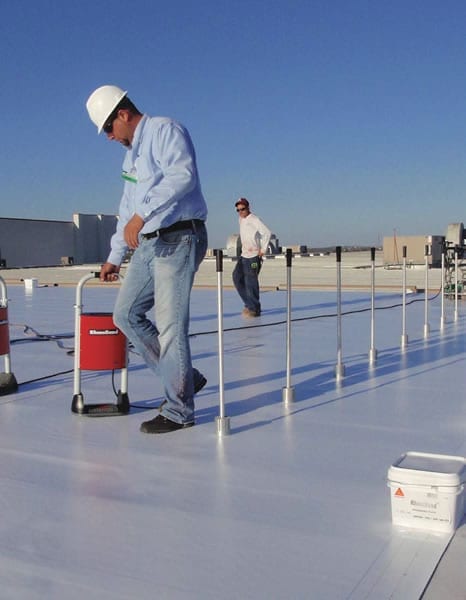
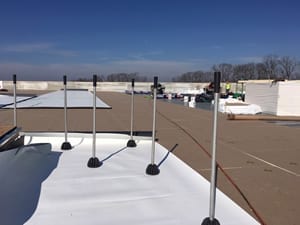
TPO and PVC roof systems are called Thermoplastic as the seams of the membrane and flashings can be fused together through a process called hot air welding. Special hot air welders are first used to secure the seams of a TPO or PVC roof system. Next, it is time to secure the roof membrane to the plates. The underside of the roof membrane is then welded to the plates with an induction tool. Most induction welding equipment has a plate finding tool so that the plates can be located beneath the membrane. After the welding is complete, magnetic cooling clamps are placed over the plates to ensure the bottom surface of the membrane is bonded to the coated plates and so the heat from the plate does not burn the roof membrane.
What are the Benefits of an Induction Welded Roof?
This system requires fewer fasteners and allows for increased productivity, less labor cost, lower material cost, and high wind uplift ratings. This system is available from most major commercial roof manufacturers including; Firestone Building Products (InvisiWeld), Carlisle Syntec Systems (RhinoBond), GAF Materials Corporation (RhinoBond), Johns Manville (Isoweld), and Duro-Last (RhinoBond). Roof system warranties for induction welding are available for up to 20 years. They can be installed on many types of roof decks including steel, wood, and concrete.
- Roof systems are installed more efficiently through induction welding without sacrificing wind uplift resistance from similar systems.
- Induction welding can occur in cold weather when adhered systems cannot.
- Membrane seams are not penetrated with fasteners.
- No half sheets are required, reducing the number of seams on the roof.
- The installation of induction welded membrane roofs does not produce fumes, odors, or VOC’s.
- Induction weld systems are an economical solution for metal retrofit applications.
Deer Park Roofing
Stay Updated with Our Latest News and Innovations


Deer Park Roofing
Ready to Start Your Roofing Project?
Contact Deer Park Roofing today for a free estimate and expert consultation on your commercial roofing needs.